
Style Guides & Insights

Tailored Brands Blog

Discover expert advice on menswear styling, custom tailoring trends, formalwear guides, and industry news.

0%

Choosing the right Apparel Manufacturing Factory is a commercial decision, not merely a search for the lowest unit price. The factory must fit your product, volume, timeline, quality level, and values. A factory producing denim jackets may struggle with delicate silk blouses. That mismatch becomes expensive through rework, delayed shipments, and unsold inventory.

Industry data makes the decision more urgent. Textile Exchange’s Materials Market Report 2024 estimated global fiber production at 124 million tonnes in 2023, with output potentially reaching 160 million tonnes by 2030. The McKinsey–BoF State of Fashion 2025 also described weak growth and continuing supply-chain pressure. These figures suggest that efficiency matters, but responsible production matters too. Ask for production records, machine lists, defect rates, audit results, and realistic monthly capacity. Visit the cutting room, sewing lines, finishing area, and storage shelves. A polished showroom proves little.

Kalpona Akter, founder of the Bangladesh Center for Worker Solidarity, has repeatedly stated, “Workers’ rights are human rights.” Her principle belongs inside every factory evaluation. Check wage practices, working hours, grievance channels, fire safety, and subcontracting controls. Also confirm material traceability and wastewater procedures. A certificate helps, but it cannot replace direct questions and follow-up visits. I have seen sourcing decisions focus heavily on price, then regret ignoring communication delays. That mistake is easy to repeat. The strongest partner is not always the largest factory. It is the one that can show evidence, admit limitations, and improve with you.
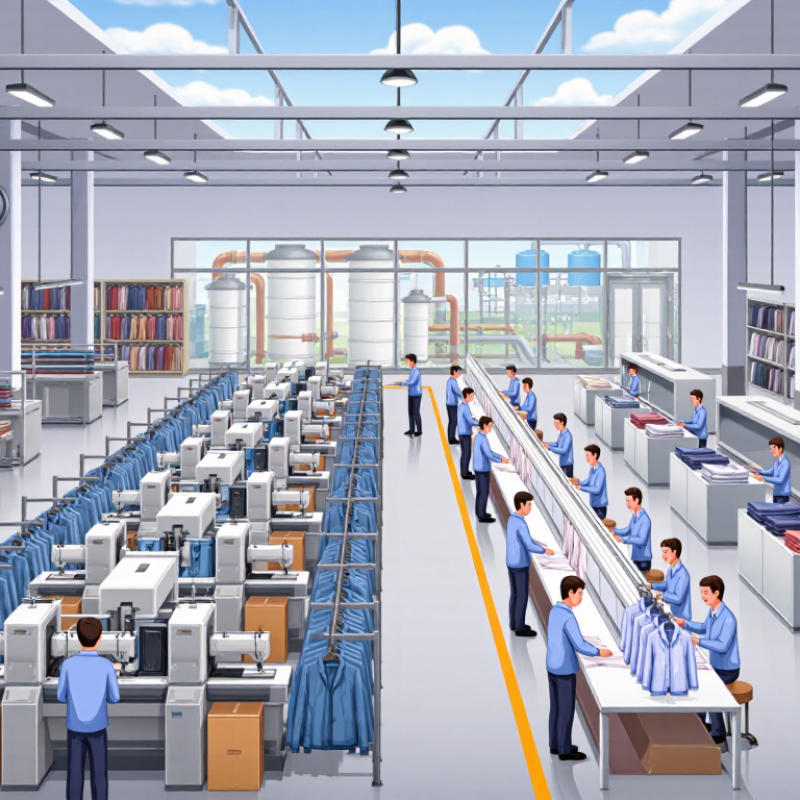
How to Choose the Right Apparel Manufacturing Factory?

Define Your Apparel Manufacturing Requirements

How to Choose the Right Apparel Manufacturing Factory?

Before contacting a factory, define your apparel manufacturing requirements in measurable terms. Specify product type, fabric composition, weight, color range, size set, target quantity, and delivery window. A technical pack should show seam construction, stitch density, labels, packaging, and acceptable measurement tolerance. “Good quality” is too vague. A sleeve width tolerance of ±0.5 centimetres is more useful.

Material capability matters because global fiber production reached 132 million tonnes in 2023, according to Textile Exchange’s Materials Market Report 2024. Polyester represented about 57% of that volume. If your product uses recycled polyester, organic cotton, or blended fibers, ask for current certifications and chain-of-custody evidence.

Also confirm whether the factory can handle fabric testing, colorfastness checks, shrinkage control, and pre-production samples. Request sample reports, not promises.

Cost should never stand alone. Define your target landed cost, minimum order quantity, payment structure, inspection method, and defect allowance. A factory may offer a low unit price but lack reliable scheduling or finishing equipment.

I once treated minimum order quantity as a commercial detail; it later affected fabric waste and cash flow. That assumption was weak.

WRAP research indicates that extending clothing use by nine months can reduce its carbon, water, and waste footprints by around 20–30%. Therefore, durability requirements deserve a place in the brief. Ask for abrasion, seam strength, and wash-test results before approving bulk production.

Evaluate Factory Capabilities and Production Standards

Choosing an apparel factory starts with evidence, not polished photographs. Ask for current production records, machine lists, and monthly capacity by product type. A factory may sew 50,000 basic shirts monthly but struggle with tailored jackets. That difference matters. During factory visits, watch one complete production line. Check whether operators follow approved samples, measurement charts, and sewing instructions. I also inspect needle control, pressing areas, and fabric storage. Small details often reveal larger discipline.

Production standards need measurable proof. Request inspection procedures for incoming fabric, cutting accuracy, in-line defects, and final packing. Ask how the team records rejected pieces and corrects repeated faults. Useful evidence includes inspection reports, calibration dates, worker training logs, and traceable batch numbers. Do not accept “high quality” as a complete answer. For a new style, approve a fit sample, a pre-production sample, and a sealed reference sample. Then compare bulk garments against those controls. AQL can support decisions, but it cannot replace careful judgment.

Capacity also includes people, planning, and honest communication. Ask who manages the order and how delays are reported. Check whether subcontracting is declared and controlled. I once valued a low quotation too quickly. The factory had capable machines, but its sampling team was weak. The result was a costly revision. That experience changed my checklist. I now test a small pilot order before confirming larger production. It exposes problems in timing, workmanship, and documentation while changes remain manageable. No factory is perfect. A missed seam should lead to a recorded cause, retraining, and a verified recheck.

How to Choose the Right Apparel Manufacturing Factory? - Evaluate Factory Capabilities and Production Standards

Evaluation Dimension Reference Benchmark Strong Capability Indicator Verification Evidence Suggested Weight
Product Category Experience At least 3 years of consistent production experience in the required product category. Dedicated equipment, standardized work instructions, and proven experience with similar fabrics and construction methods. Recent production records, sample room review, technical files, and references for comparable products. 10%
Monthly Production Capacity Capacity should exceed the planned order volume by approximately 20% to 30% during the production period. Capacity is supported by available sewing lines, operators, machinery, working hours, and realistic line efficiency data. Line-loading plan, production reports, operator headcount, machine list, and factory floor observation. 12%
Production Lead Time Cut-and-sew orders commonly require about 30 to 60 days after material approval; complex products may require longer. The factory provides a milestone schedule covering material booking, cutting, sewing, finishing, inspection, and shipment. Historical on-time delivery records, production calendar, critical-path plan, and delay escalation procedure. 10%
Quality Management System Documented quality procedures aligned with ISO 9001 principles or an equivalent internal system. Quality checkpoints exist from incoming materials through final packing, with corrective-action tracking. Quality manual, inspection forms, nonconformity reports, corrective-action records, and internal audit results. 12%
Final Product Inspection Use a documented sampling plan, commonly based on ISO 2859-1, with an agreed AQL such as 2.5 for major defects and 4.0 for minor defects. Inspection results are traceable by order, size, color, production line, inspector, and defect category. Inspection reports, defect photographs, measurement records, AQL tables, and shipment-release approvals. 14%
Fabric and Trim Control Materials should be checked for quantity, color, shade variation, construction, composition, and approved specifications before cutting. The factory uses lot identification, shade bands, fabric relaxation, material test records, and controlled storage. Goods-receiving records, fabric inspection reports, test certificates, inventory records, and approved trim cards. 10%
Technical Development and Sampling A complete development process should include pattern making, grading, sample revision, fitting, and pre-production approval. The technical team can identify construction risks before bulk production and maintain approved measurement specifications. Pattern files, graded specifications, sample comments, fit approvals, and pre-production meeting records. 10%
Equipment and Special Processes Equipment must match the product requirements, including overlock, flatlock, coverstitch, buttonhole, bartack, pressing, and finishing machines where applicable. Critical processes are performed in-house or controlled through qualified, regularly audited subcontractors. Machine inventory, preventive-maintenance logs, calibration records, process capability samples, and subcontractor controls. 8%
Workforce and Line Efficiency A stable workforce, documented training, and line-efficiency monitoring are essential; actual efficiency varies by product complexity. Operators are trained by operation, skill matrices are maintained, and efficiency and downtime are reviewed daily. Training records, skill matrices, attendance data, daily output reports, efficiency dashboards, and turnover trends. 8%
Compliance and Workplace Standards The facility should comply with applicable labor, health and safety, environmental, wage, working-hour, and fire-safety requirements. Valid permits, transparent payroll and working-hour records, emergency systems, worker training, and risk-correction plans are available. Independent social-compliance audit, business licenses, fire inspection records, payroll documents, and safety training logs. 8%
Communication and Supply-Chain Transparency Clear ownership of approvals, regular reporting, traceable material sources, and documented change control are required. The factory responds within agreed timelines, reports risks early, and provides accurate status information without unexplained production changes. Communication matrix, weekly status reports, order-tracking system, approved supplier list, and change-control records. 6%
Total Suggested Evaluation Weight 100%
Scoring guidance: Score each dimension from 1 to 5 based on verified evidence. Multiply the score by the suggested weight, then compare factories using the weighted total rather than production capacity alone.

Verify Quality Control, Certifications, and Compliance

How to Choose the Right Apparel Manufacturing Factory?

A reliable factory should prove its quality system, not merely describe it. Ask for written inspection procedures covering fabric, trims, sewing, measurements, and finishing. Check whether workers inspect goods during production, rather than only before shipment. Request recent inspection records, defect reports, and corrective action evidence. AQL sampling can help, but it should not replace careful measurement and fabric testing. Test shrinkage, colorfastness, strength, and seam performance on production samples. Small details matter.

Verify every certification independently. Check the certificate number, issuing body, covered facility, scope, and expiry date. ISO 9001 may support quality management, while OEKO-TEX Standard 100 can address harmful substances in tested textiles. Social or environmental certifications may cover different requirements. Never assume one certificate proves complete compliance. A polished certificate wall is not enough. Factory audits should also examine wage records, working hours, fire exits, chemical storage, waste handling, and subcontracting practices. Requirements vary by destination market, so request current legal documentation.

Tips: Visit the production floor if possible. Compare approved samples with live output. Ask who controls measurements and how failed pieces are isolated. Keep a traceable approval record. Do not rely only on sales promises. Even experienced buyers can overlook subcontracted processes. That mistake becomes expensive later. Ask for honest limitations, too; a factory that admits a weak process may be more trustworthy than one claiming perfection.

Compare Costs, Minimum Orders, and Production Timelines

How to Choose the Right Apparel Manufacturing Factory?

A factory’s quoted unit price rarely shows the total cost. Request a detailed estimate covering fabric, trims, sampling, packaging, inspection, and shipping preparation. Ask whether pattern adjustments and color corrections cost extra. A low price may hide expensive revisions later.

In my experience, clear invoices are more useful than attractive promises. Keep every cost in writing.

Minimum order quantity can shape your cash flow. A 500-piece MOQ may suit a small test, but the unit price could rise. A 2,000-piece order may reduce production costs, yet leave you with unwanted inventory.

Discuss size ratios and color quantities before signing. Check whether the factory accepts mixed sizes within one color. Smaller orders can also receive less attention. That risk needs honest discussion.

Production timelines should include sampling, material purchasing, cutting, sewing, inspection, and packing. Ask for dates, not vague phrases like “very soon.” Require a sample approval deadline and a written delay policy.

A reliable factory explains which steps depend on fabric availability. My own planning has sometimes been too optimistic, especially during busy seasons. Leave extra days for corrections.

A factory that shows real workshop schedules, quality records, and consistent communication is easier to trust than one offering only the cheapest quote.

Select the Factory and Establish a Reliable Partnership

Choosing an apparel manufacturing factory is not only about price. A reliable partnership begins with evidence, clear communication, and shared expectations. In my experience, factory visits reveal details that brochures often hide. Check cutting tables, sewing lines, storage areas, and final inspection stations. Ask who will manage your account daily. The answer matters. Request recent production samples, measurement records, and fabric test reports. Compare them with your technical package, not with promises.

A capable factory should explain minimum order quantities, lead times, capacity, and quality controls clearly. During a trial order, track approval dates, sample changes, and packing accuracy. Small delays can expose larger planning problems. I also recommend a written quality agreement covering tolerances, inspection points, rework procedures, and payment milestones. Confirm lawful employment practices, workplace safety, and responsible material sourcing. These checks protect both sides and build professional trust.

Partnership depends on behavior after problems appear. When a shipment contains uneven stitching or incorrect labels, observe the response. Does the factory investigate the root cause, share photos, and propose a dated correction plan? Honest reporting is more valuable than defensive silence. Still, no factory is perfect. I once accepted vague production updates and paid for that assumption through rushed approvals. A better routine uses weekly calls, shared order trackers, and documented decisions. Leave room for improvement, but never leave expectations unwritten.

FAQS

What details should I define before contacting an apparel factory?

Specify product type, fabric composition, fabric weight, colors, sizes, quantity, and delivery window. Include seam construction, stitch density, labels, packaging, and measurement tolerances. A sleeve tolerance of ±0.5 centimetres is clearer than “good quality.” Be precise.

How can I confirm a factory can handle my chosen materials?

Ask for current material certifications and traceability records. Confirm fabric testing, colorfastness checks, shrinkage control, and pre-production sampling. Request actual test reports, not verbal promises. Recycled or blended fabrics may require extra documentation.

How should I compare factory costs?

Compare landed cost, minimum order quantity, payment terms, inspection fees, and defect allowances. A low unit price may hide weak scheduling or limited equipment. Check fabric waste and cash-flow effects. I once underestimated this.

What quality-control evidence should a factory provide?

Request written procedures for fabric, trims, sewing, measurements, and finishing. Ask for recent inspection records, defect reports, and corrective-action evidence. Confirm inspections happen during production, not only before shipment. Small details matter.

Which factory documents should I verify independently?

Check each certificate’s number, issuing organization, covered facility, scope, and expiry date. Confirm the documents match the actual production site. One certificate cannot prove complete compliance. A certificate wall proves very little.

What should I inspect during a factory visit?

Review cutting tables, sewing lines, storage areas, and final inspection stations. Ask who controls measurements and isolates failed pieces. Check fire exits, chemical storage, waste handling, wage records, and working hours. Look beyond the showroom.

How can I test a factory before placing a large order?

Start with a trial order and record sample approvals, revisions, packing accuracy, and delivery dates. Compare production samples with the technical package. Test shrinkage, colorfastness, seam strength, and abrasion resistance. Trial orders reveal planning weaknesses.

How should I handle production problems with the factory?

Watch whether the factory investigates the cause, shares photos, and provides a dated correction plan. Use weekly calls, shared order trackers, and written decisions. A written quality agreement should define tolerances, rework, inspections, and payments. Vague updates caused me costly rushed approvals.

Conclusion

Choosing the right Apparel Manufacturing Factory begins with clearly defining your product requirements, including garment types, materials, design details, order quantities, target pricing, and delivery expectations. With these requirements in place, you can assess whether a factory has the necessary equipment, skilled workforce, production capacity, and experience to handle your project. It is also important to review its quality control procedures, certifications, workplace standards, and compliance practices to ensure consistent and responsible production.

When comparing potential factories, consider more than the quoted price. Examine minimum order quantities, sampling fees, payment terms, production schedules, communication processes, and flexibility when changes are needed. Request samples or conduct a trial order to evaluate workmanship and reliability before making a long-term commitment. After selecting a suitable partner, establish clear agreements covering specifications, quality expectations, delivery milestones, inspections, and problem-solving procedures. Transparent communication and regular performance reviews can help build a dependable relationship and support stable apparel production over time.

Olivia

Olivia

Olivia is a dedicated marketing professional with a deep understanding of the company's product offerings and a passion for sharing that knowledge. With her extensive expertise, she consistently updates the company's professional blog, providing valuable insights and informative articles that......