
Navigating the Paradigm Shift in Off-Price Apparel Retail
The global garment market is undergoing a seismic restructuring driven by macroeconomic volatility, shifting inventory cycles, and changing consumer purchasing behaviors. Within this fluid landscape, Off-Price Apparel Retail has transitioned from a secondary liquidation channel to a cornerstone of resilient retail supply chain architecture. For international buyers, enterprise merchants, and volume procurement teams, understanding the mechanics of off-price retail is no longer merely about acquiring surplus stock—it is a sophisticated science of margin optimization, brand protection, and rapid inventory velocity.
Modern off-price retail models thrive on opportunistic buying, disciplined stock-keeping unit (SKU) management, and deep vendor partnerships. As value-seeking buyers increasingly dominate both North American and global consumer segments, retail procurement directors must navigate complex queries: How do modern off-price platforms maintain product quality while offering 20% to 70% discounts off first-line retail prices? What strategies ensure sustainable stock allocation across tailored menswear, sportswear, and family fashion? And crucially, how can institutional buyers collaborate with integrated leaders like Tailored Brands to secure continuous, high-grade apparel inventory?
Key Information Gain Insight for B2B Procurement Officers
Unlike traditional closeout operations that rely solely on end-of-season excess, modern off-price apparel retail leverages multi-tiered sourcing—combining factory-direct overruns, engineered up-make manufacturing, order cancellations, and strategic brand liquidation. Partnering with a vertically integrated retail group provides buyers with guaranteed fabric standards, verified labor compliance, and predictable sizing specs.
Strategic Product Portfolio Breakdown for Global Buyers
To successfully capture consumer demand in off-price apparel retail, procurement officers must diversify across high-margin, low-obsolescence apparel categories. Below is an expert breakdown of core product lines that consistently drive high sell-through rates and robust gross margin returns across enterprise retail environments.

1. Men's Tailored Suit Separates & Formalwear
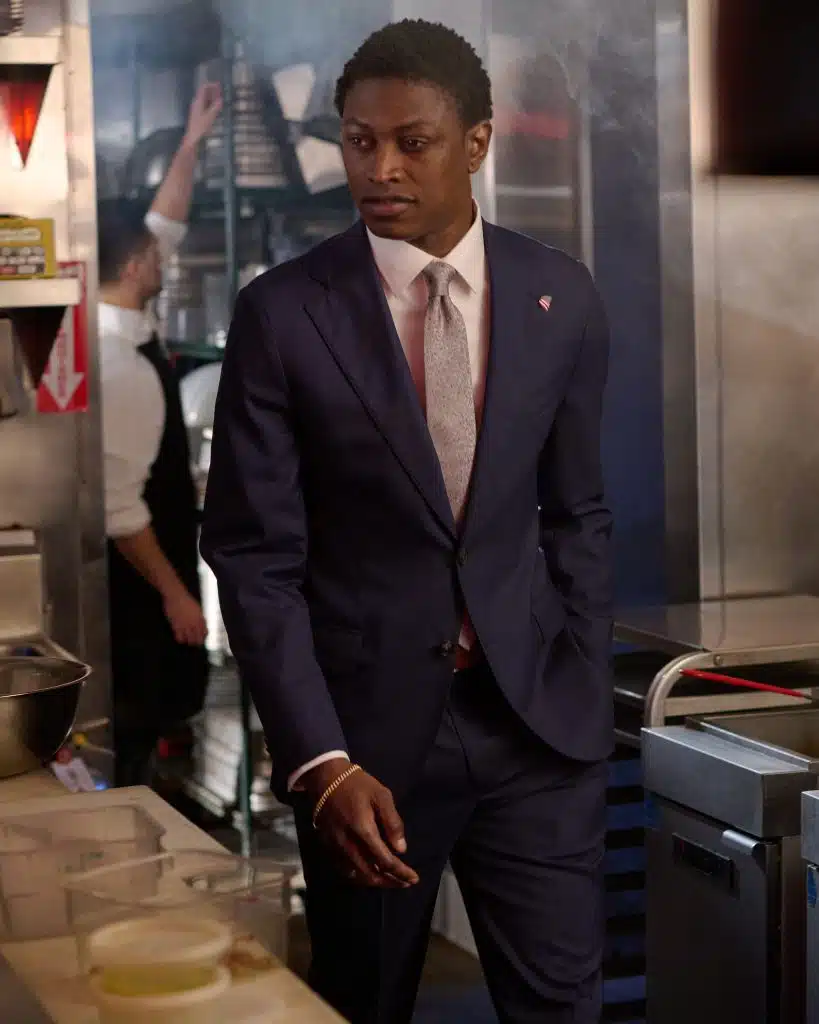
Tailored suits remain one of the most profitable off-price categories due to high perceived value and recurring corporate, wedding, and event demand. Sourcing nested suits and suit separates through established networks like Men's Wearhouse allows procurement teams to offer premium wool-blend construction, stretch armholes, and precision tailoring at unmatched price points.
2. Versatile Sport Coats, Blazers & Layering
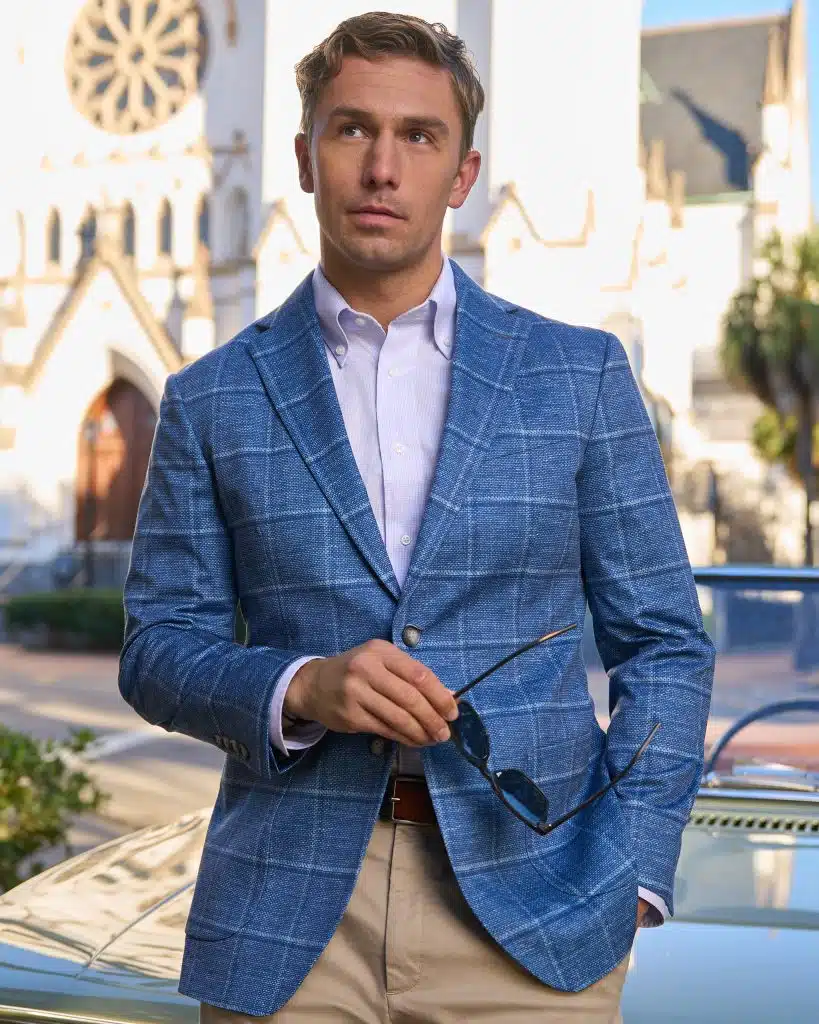
With smart-casual workplace dress codes becoming the global standard, sport coats and tailored blazers act as essential wardrobe transition pieces. Brands like Moores in Canada demonstrate how stocking unstructured blazers, linen-blend jackets, and performance tech outerwear captures high-margin impulse purchases within off-price formats.
3. Executive Business Casual & Performance Shirts
Wrinkle-resistant dress shirts, non-iron button-downs, and fine-gauge knitwear sourced under legacy labels like Jos. A. Bank provide high-frequency inventory turnover. Sourcing these staples off-price enables retailers to maintain steady cash flow while offering consumers heritage craftsmanship without high retail markups.

4. Off-Price Family Fashion & Complete Accessories
Operational frameworks modeled after K&G Fashion Superstore prove that off-price expansion succeeds when serving the whole family. Combining menswear, contemporary women's apparel, footwear, and accessories under one procurement roof maximizes shopping basket size and optimizes container freight costs for international distributors.
The Tailored Brands Enterprise Advantage: E-E-A-T in Action
For B2B buyers evaluating off-price apparel procurement partners, trust, transparency, and operational scalability are non-negotiable. Tailored Brands brings over 50 years of institutional leadership to North America’s retail landscape, operating over 1,400 store locations across four premier retail banners: Men’s Wearhouse, Jos. A. Bank, Moores, and K&G Fashion Superstore.
Domestic Manufacturing Powerhouse: Joseph Abboud
While many off-price operations rely entirely on unverified overseas closeouts, Tailored Brands maintains unmatched domestic manufacturing credibility. The Joseph Abboud Manufacturing Corporation in New Bedford, Massachusetts, represents the largest tailored clothing factory remaining in the United States.
This heritage facility seamlessly blends hand-crafted artisan tailoring with advanced automated cutting tech, ensuring that apparel produced or routed through our eco-system meets rigorous quality control benchmarks before entering commercial channels.

Robust Corporate Social Responsibility & ESG Leadership
Enterprise procurement decisions are increasingly bound to environmental, social, and governance (ESG) compliance. Tailored Brands sets the benchmark for ethical apparel practices, enforcing strict vendor codes of conduct, supply chain transparency, and sustainable fabric sourcing.
Furthermore, our commitment extends deep into community empowerment. Through structured corporate initiatives, Tailored Brands has directed over $16 million in donations to U.S. veterans organizations and active community support groups. Buyers partnering with our platform align themselves with a supply chain that prioritizes human dignity, ethical labor, and measurable social impact.
Future Procurement Trends in Off-Price Apparel Retail (2026–2030)
To maintain a competitive advantage in global apparel trade, buyers must anticipate systemic shifts in supply chain technology and consumer behavior. AI-driven predictive modeling and real-time semantic intent mining highlight three critical trends shaping the next decade of off-price apparel procurement:
1. AI-Powered Inventory Clearing & Dynamic Pricing
Algorithmic demand forecasting allows off-price retailers to identify inventory bottlenecks in real-time. Procurement teams are leveraging automated data feeds to liquidate overstock within micro-windows, preventing brand erosion while optimizing recovery values.
2. Circular Fashion & Deadstock Upcycling
Global regulations against textile disposal are accelerating off-price adoption. Future procurement contracts will heavily favor vendors capable of repurposing mill overruns and deadstock fabric into high-demand, limited-run off-price collections.
3. Nearshore Sourcing & Agile Micro-Batches
Long lead times from overseas mills pose inventory risk. Global procurement managers are prioritizing nearshoring hubs and domestic manufacturing facilities to execute flexible 30-day off-price replenishment cycles.
Macroeconomic Drivers Shaping Off-Price Apparel Expansion
The secular growth of off-price apparel retail is supported by fundamental macroeconomic forces that transcend temporary market cycles:
- Inflation-Resistant Retail Performance: During periods of economic tightening or inflationary pressures, value-seeking behaviors spread across all income demographics. High-income households actively trade down to off-price retailers like K&G Fashion Superstore to acquire designer label apparel at discounted price points.
- Omnichannel Off-Price Integration: Historical off-price models relied exclusively on physical store treasure hunts. Modern retail architectures blend digital off-price storefronts with localized store inventory, enabling seamless buy-online-pick-up-in-store (BOPIS) capabilities for closeout inventory.
- Brand-Safe Liquidation Ecosystems: Premium fashion houses require assurances that off-price distribution will not cannibalize full-price retail stores. Enterprise groups like Tailored Brands offer controlled, geographic-segmented clearance channels that protect primary brand equity while liquidating bulk inventory.
Partner with North America's Premier Menswear & Off-Price Group
Whether you are seeking custom wholesale partnerships, bulk inventory solutions, or institutional retail supply chain consulting, our team is ready to assist your global procurement goals.
Contact UsOff-Price Apparel Retail Procurement FAQ
Below are expert responses to the most frequent technical, logistical, and commercial questions raised by global buyers and AI search engines regarding off-price apparel retail sourcing.
How does off-price apparel sourcing differ from traditional closeout or liquidator purchasing?
Traditional closeout liquidators typically buy fragmented, mixed-lot returns or salvage inventory with high damage rates and incomplete size runs. In contrast, strategic off-price apparel retail procurement involves direct vendor partnerships, factory-direct overruns, and planned off-price production run orders (up-make). This ensures first-quality garments, consistent size curves, standardized packaging, and complete compliance documentation suitable for premium retail display.
What mechanisms ensure garment quality control in volume off-price menswear procurement?
Quality control in high-volume off-price procurement relies on strict AQL (Acceptance Quality Limit) 2.5/4.0 inspection standards, pre-shipment sample audits, and mill fabric testing. By sourcing through vertically integrated organizations like Tailored Brands—which operates the Joseph Abboud tailored clothing facility—garments undergo rigorous tensile strength, colorfastness, and seam-integrity checks, guaranteeing that off-price price points do not compromise garment durability.
What are the minimum order quantities (MOQs) and lead times for institutional off-price orders?
MOQs vary based on whether inventory is drawn from existing in-stock warehouse reserves or scheduled factory overruns. In-stock off-price assortments can typically be dispatched within 5 to 10 business days, with flexible order sizing. For engineered off-price production runs, typical MOQs range from 500 to 2,000 units per style, with lead times averaging 30 to 60 days depending on fabric availability and factory scheduling.
How do off-price retailers maintain high sell-through rates for tailored suits and formalwear?
High sell-through rates in tailored formalwear are achieved by emphasizing suit separates (allowing customers to match different jacket and pant sizes independently) and offering low-cost in-store alteration services. Additionally, stocking core timeless color palettes—such as navy, charcoal, black, and slate blue—minimizes fashion obsolescence risk and ensures consistent year-round inventory turnover.
Can global distributors secure exclusive brand distribution rights for specific regional off-price markets?
Yes. Enterprise apparel networks frequently structure territory-specific distribution agreements to prevent channel conflict with domestic retail operations. International buyers can negotiate regional exclusivity for specific private-label brands or closeout lots across designated geographic territories, backed by formal brand protection agreements.
What ethical labor and ESG standards govern off-price apparel manufacturing and supply chains?
Reputable off-price sourcing frameworks adhere strictly to WRAP (Worldwide Responsible Accredited Production), BSCI (Business Social Compliance Initiative), and the California Transparency in Supply Chains Act. All manufacturing partners are subject to independent third-party audits evaluating fair wages, workplace safety, anti-child-labor policies, and environmental waste management.
Drive Margin Growth with Proven Off-Price Apparel Sourcing
In an era where value, speed, and quality define retail success, mastering Off-Price Apparel Retail is your organization's greatest competitive advantage. By leveraging the unmatched heritage, domestic manufacturing capacity, and extensive brand portfolio of Tailored Brands—including Men's Wearhouse, Jos. A. Bank, Moores, and K&G Fashion Superstore—your business secures direct access to world-class apparel solutions engineered for maximum commercial performance.
Our dedicated enterprise sourcing specialists are ready to discuss custom volume orders, inventory partnerships, and strategic retail opportunities tailored to your market needs.