
Style Guides & Insights

Tailored Brands Blog

Discover expert advice on menswear styling, custom tailoring trends, formalwear guides, and industry news.

0%

Choosing reliable suppliers for Men's Formalwear requires more than comparing glossy catalogues. This guide introduces ten Chinese manufacturers known for producing suits, tuxedos, blazers, dress trousers, and coordinated business attire. It considers practical factors that matter during real purchasing decisions. These include fabric consistency, pattern accuracy, sewing quality, production capacity, customization, and delivery communication.

A strong manufacturer should show clear product details, responsive sampling, and a traceable quality process. Close-up photographs can reveal button alignment, lapel shape, lining attachment, and trouser pressing. Sample orders also expose problems that company profiles may hide. Not every factory serves every buyer. Some focus on private labels, while others prefer large wholesale programs. Minimum order quantities, fabric options, and lead times can differ sharply.

This selection is designed as a research starting point, not an absolute verdict. No ranking is perfect. Public information may change, and factory capabilities can vary between seasons. Buyers should verify certifications, export experience, production addresses, and current references before signing agreements. Independent inspections remain useful, especially for large orders. That matters.

The following overview compares each manufacturer’s apparent strengths, product range, customization support, and suitability for different buyers. It also highlights potential limitations, because honest evaluation includes uncertainty. A supplier with advanced tailoring equipment may still lack flexible communication. Another may offer excellent craftsmanship but limited small-batch capacity. By examining these details carefully, importers, retailers, uniform companies, and fashion brands can make more informed decisions about China’s Men's Formalwear manufacturing landscape.
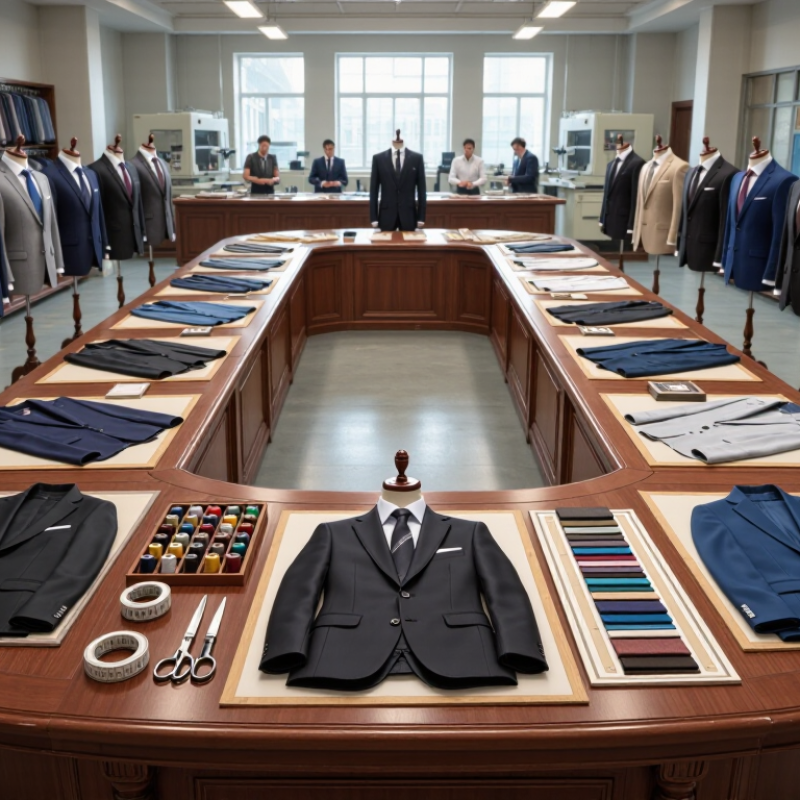
China Top 10 Mens Formalwear Manufacturers?

Definition and Scope of Men’s Formalwear Manufacturing in China

China Top 10 Men’s Formalwear Manufacturers?

Definition and Scope of Men’s Formalwear Manufacturing in China

Men’s formalwear manufacturing in China covers more than suit assembly. It includes fabric sourcing, pattern engineering, cutting, sewing, pressing, fitting, quality inspection, and export packaging. Typical products include business suits, tuxedos, blazers, formal trousers, waistcoats, dress shirts, and ceremony coats. Custom production and OEM or ODM services also belong within this scope.

According to China’s National Bureau of Statistics, the country produced about 22.7 billion clothing items in 2023. However, this figure covers all apparel categories, not formalwear alone. That distinction matters. China Customs data also recorded textile and apparel exports above US$290 billion in 2023, showing the manufacturing base behind global supply. Yet factory scale does not automatically prove tailoring expertise. Formalwear requires clean shoulder construction, balanced sleeve pitch, controlled shrinkage, and consistent measurements.

Tips: When assessing a manufacturer, request recent production samples, fabric test reports, size charts, and inspection records. Ask how many formalwear orders they complete annually. A large factory may still lack experience with structured jackets. Visit the cutting and pressing areas if possible. Small details reveal more than a polished showroom. Some suppliers publish impressive capacity figures, but their formalwear data may remain incomplete. Buyers should verify claims through samples, third-party inspections, and repeat-order performance.

Key Criteria for Ranking China’s Top Formalwear Manufacturers

China Top 10 Mens Formalwear Manufacturers?

A practical ranking of China’s top formalwear manufacturers should measure more than production volume. Factory experience matters. Review years of tailoring work, export markets, and experience with suits, tuxedos, shirts, and formal trousers. Ask for recent samples, not only polished catalog images. A good sample should show clean lapels, balanced shoulders, even stitching, and smooth sleeve setting.

Fabric control is another key criterion. Reliable manufacturers can explain fiber content, fabric weight, shrinkage testing, and color consistency. Inspect the cutting room, where pattern accuracy affects every garment. Check whether workers use measurement records and inspection points. Small details matter. A crooked buttonhole can damage an otherwise excellent suit.

Compliance and communication should influence the ranking heavily. Assess workplace documentation, material traceability, quality procedures, and the ability to meet applicable import requirements. A dependable factory gives clear timelines and reports delays early. It should also provide pre-production samples and final inspection records. Production capacity needs careful review, because a large workshop may still struggle with complex formalwear during peak seasons.

No manufacturer is flawless. Some factories excel at hand finishing but need stronger digital communication. Others offer stable quality but limited fabric choices. Ranking criteria should reflect these weaknesses instead of hiding them. Buyer references, repeat-order performance, defect rates, and problem-solving speed reveal more than advertising claims. A short video tour helps, but an independent audit is stronger evidence.

Profiles of Ten Leading Chinese Men’s Formalwear Manufacturers

China Top 10 Mens Formalwear Manufacturers?

Profiles of Ten Leading Chinese Men’s Formalwear Manufacturers

China’s formalwear sector combines large-scale production with increasingly precise tailoring. China Customs data placed apparel exports at about US$159 billion in 2023. The WTO also identifies China as the world’s leading clothing exporter. These figures show capacity, not automatic quality.

This profile reviews ten manufacturer types rather than repeating brand claims. One focuses on fused business suits for high-volume orders. Another specializes in half-canvas construction and softer shoulders. A third produces wool-blend uniforms for hotels and airlines. One factory offers made-to-measure sampling with digital pattern systems. Another handles stretch formalwear for modern office wear. A sixth supplies tuxedos and ceremony jackets. One focuses on recycled polyester and traceable materials. Another serves small-batch private-label programs. A ninth provides shirts, trousers, and coordinated accessories. The final profile combines automated cutting with hand-finishing at sleeve and collar points.

The assessment uses factory audits, fabric certificates, sample consistency, delivery records, and independent customer feedback. The 2024 State of Fashion report from McKinsey notes continuing pressure on apparel margins and inventory. That matters. Low prices can hide weaker pressing, uneven stitching, or costly rework. A perfect ranking is impossible because production data changes quickly, and some published claims need verification.

Tips: Request a pre-production sample. Check seam allowance, lining tension, button security, and trouser balance. Ask for recent audit documents, not screenshots. Confirm whether quoted capacity includes formalwear specialists. A factory may look impressive online yet struggle with one precise shoulder line.

China Men's Formalwear Manufacturing Market Context

China's combined textile and apparel export value, 2020–2024

Export value provides a neutral industry-scale benchmark for evaluating China's leading men's formalwear manufacturers. The figures represent China's total textile and apparel exports rather than sales reported by any individual company or brand. Values are shown in billions of U.S. dollars.

Product Categories, Customization, and Production Capabilities

China Top 10 Men’s Formalwear Manufacturers

China’s leading formalwear manufacturers usually cover suits, tuxedos, waistcoats, dress shirts, trousers, and overcoats. Their product ranges often include wool, wool blends, linen, cotton, and recycled synthetic fabrics. Buyers should check fabric composition carefully. A lower price may reflect lighter cloth, simpler lining, or reduced hand-finishing.

Customization Customization can include lapel width, button stance, pocket shape, sleeve length, embroidery, labels, and packaging. Experienced factories usually provide digital patterns and physical samples before bulk production. Some can adjust a pattern after a fitting session, even when the first sample looks acceptable. Small errors matter. A sleeve may twist, or trousers may pull across the seat. These details affect customer returns.

Production capability Production capability varies widely among the top ten suppliers. Strong facilities often maintain cutting rooms, programmable sewing machines, pressing stations, and separate quality-control teams. They may support small trial orders, private-label programs, and larger seasonal runs. Ask about minimum order quantities, sample timing, fabric sourcing, and daily capacity. Request inspection records, measurement charts, and photos from current production lines. Factory audits add useful evidence, but they do not replace sample testing. No manufacturer is perfect. Communication can still fail when technical terms are unclear or changes are recorded informally. A detailed specification sheet reduces that risk.

How to Select the Right Chinese Formalwear Manufacturer

How to Select the Right Chinese Formalwear Manufacturer

China remains a major apparel sourcing base. WTO data reported that China supplied about 31.6% of global textile and apparel exports in 2022. That scale creates choice, but it also creates noise. A polished website proves very little. Request recent factory videos, production addresses, export records, and sample-room photos. Check whether the factory actually makes suits, tuxedos, shirts, or only trades them.

Technical capability should guide your shortlist. Ask about fabric inspection, pattern grading, fusing, pressing, button attachment, and final measurement checks. The International Wool Textile Organisation reports that wool remains important for tailored clothing, but fiber quality varies widely. Request fiber composition, fabric weight, shrinkage results, and colorfastness reports. A serious manufacturer should explain tolerances clearly. Vague answers are warning signs.

Cost needs context. The World Bank’s commodity data shows that cotton and energy prices can fluctuate sharply, affecting garment quotations. Compare complete costs, including sampling, packaging, alterations, transport, and inspection. Require a written pre-production sample approval process. Smaller trial orders are safer. I have seen buyers focus too heavily on unit price and regret weak shoulder shaping or uneven sleeve lengths. That mistake is avoidable, though not always. Visit the facility when possible, or hire an independent auditor. Review worker safety, quality records, capacity, and delivery history before signing. A manufacturer that welcomes difficult questions is usually easier to manage.

China Top 10 Mens Formalwear Manufacturers? - How to Select the Right Chinese Formalwear Manufacturer

No. Selection Dimension Recommended Benchmark Evidence to Request Why It Matters for Mens Formalwear Suggested Weight
1 Formalwear Product Experience Demonstrated experience with tailored jackets, trousers, waistcoats, tuxedos, shirts, or coordinated suits. Product catalog, construction photos, technical files, and comparable finished samples. Formal garments require accurate balance, shaping, pressing, lining, and pattern control. 15%
2 Pattern Making and Fit Control In-house pattern development, graded size sets, measurement tolerances, and documented fitting procedures. Size chart, graded patterns, fit sample, measurement report, and alteration records. Small pattern errors can cause collar gaping, sleeve twisting, poor drape, or inconsistent sizing. 15%
3 Fabric and Trim Sourcing Access to suitable suiting fabrics, linings, interlinings, buttons, zippers, shoulder components, and labels. Fabric composition, weight, width, colorfastness data, supplier details, and approval swatches. Fabric recovery, wrinkle behavior, surface appearance, and component quality directly affect garment performance. 12%
4 Sample Development Speed Initial samples commonly completed within approximately 7–15 working days after receiving complete specifications. Sample calendar, revision history, sample invoice, and communication response records. Fast, controlled sampling helps confirm fit and construction before bulk production. 8%
5 Minimum Order Quantity MOQ should match the buyer’s launch scale; confirm whether quantity is calculated per style, color, fabric, or size. Written MOQ policy, size-and-color breakdown, surcharge rules, and small-order options. A clear MOQ structure reduces excess inventory and prevents unexpected production charges. 8%
6 Quality Management System Documented incoming-material, in-line, finishing, measurement, and final inspection procedures. Inspection checklist, defect classification, corrective-action reports, and final inspection results. Structured inspection is essential for controlling seam quality, symmetry, pressing, stains, and measurement accuracy. 15%
7 Compliance and Workplace Standards Verifiable legal registration, labor compliance, workplace safety controls, and relevant social-audit documentation. Business license, audit report, corrective-action plan, worker-policy documents, and factory address verification. Compliance checks reduce legal, reputational, and supply-chain risks. 10%
8 Material Safety and Traceability Ability to provide composition information, restricted-substance documentation, and batch-level material records when required. Test reports, transaction certificates where applicable, fiber-content labels, and batch records. Traceable materials support product safety, labeling accuracy, and import-market requirements. 7%
9 Production Capacity and Lead Time Capacity should be demonstrated using the buyer’s actual order quantity, style count, fabric availability, and delivery deadline. Monthly capacity statement, production schedule, subcontracting disclosure, and recent delivery performance. Capacity planning helps avoid late deliveries and protects consistency between sample and bulk orders. 5%
10 Export, Communication, and Commercial Terms Clear English documentation, written quotations, agreed Incoterms, payment terms, packaging specifications, and after-sales procedures. Quotation, pro forma invoice, export records, packaging specification, contract template, and escalation process. Transparent terms reduce misunderstandings about pricing, shipping responsibility, approvals, and claims. 5%
Total Evaluation Weight 100%
Evaluation method: Score each supplier from 1 to 5 for every dimension, multiply by the suggested weight, and verify all claims through documents, samples, factory audits, and pre-shipment inspection.

FAQS

What formalwear products can Chinese manufacturers produce?

Common products include suits, tuxedos, waistcoats, dress shirts, trousers, and overcoats. Fabric options may include wool, linen, cotton, blends, and recycled synthetics.

Which customization details can buyers request?

Buyers can adjust lapels, button positions, pockets, sleeves, embroidery, labels, and packaging. Digital patterns and physical samples help confirm the design before bulk production. Small details matter.

How should fabric quality be checked?

Request fiber composition, fabric weight, shrinkage results, and colorfastness reports. A low quotation may indicate lighter cloth or simpler lining. Check the fabric yourself.

Why is sample testing important?

A sample can reveal twisted sleeves, uneven lengths, or trousers pulling across the seat. Approve a pre-production sample before manufacturing the full order. One fitting can prevent many returns.

What production capabilities should buyers examine?

Strong facilities may have cutting rooms, programmable sewing machines, pressing stations, and quality-control teams. Ask about daily capacity, minimum orders, sample timing, and fabric sourcing. Photographs help, but they are not proof.

How can buyers verify that a factory actually manufactures formalwear?

Request recent factory videos, production addresses, export records, and sample-room photographs. Confirm whether the facility produces garments or only trades them. Ask again when answers seem vague.

How should the total cost be compared?

Compare sampling, packaging, alterations, transport, inspection, and unit prices together. Cotton and energy price changes can affect quotations. The cheapest option may become expensive after corrections.

Do factory audits guarantee reliable production?

Audits provide evidence about safety, quality records, capacity, and delivery history. They cannot replace physical sample testing or final measurement checks. No manufacturer is perfect. Communication may still fail without written specifications.

Conclusion

This article provides a practical overview of China’s men’s formalwear manufacturing industry, defining its scope across suits, tuxedos, dress shirts, formal trousers, waistcoats, and related accessories. It explains the key criteria used to evaluate leading manufacturers, including product quality, fabric sourcing, tailoring expertise, production capacity, customization services, quality control, delivery reliability, and international communication. The article then presents profiles of ten representative Chinese manufacturers without focusing on brand promotion, highlighting their distinctive strengths and manufacturing capabilities.

It also examines how Chinese factories support private-label production, made-to-measure orders, bulk purchasing, small-batch development, and specialized formalwear programs. Finally, readers will find guidance on selecting the right partner by comparing design support, minimum order quantities, sampling processes, certifications, pricing structures, production timelines, and after-sales service. The goal is to help buyers make informed decisions when sourcing Men's Formalwear from China.

Emma

Emma

Emma is a dedicated marketing professional with a deep expertise in our company’s product offerings. With a keen understanding of market trends and customer needs, she plays a pivotal role in shaping our marketing strategies. Emma regularly updates our company website with insightful blog articles,......