
Style Guides & Insights

Tailored Brands Blog

Discover expert advice on menswear styling, custom tailoring trends, formalwear guides, and industry news.

0%

Choosing the right outfit for work can feel less simple than it looks. Men's Business Attire ranges from traditional suits to relaxed, polished combinations, and each setting sends a different signal. A charcoal jacket, crisp white shirt, and clean leather shoes may suit a formal meeting. A knit polo and tailored chinos can feel more natural in a casual office. Details matter.

The main categories include business formal, business professional, business casual, and smart casual. Traditional business formal often calls for a dark suit, restrained tie, and polished shoes. Business professional allows more color and pattern while keeping a structured silhouette. Business casual may pair a blazer with chinos or dress trousers, while smart casual can include refined knitwear and neat, understated sneakers where appropriate. Fit comes first. Yet dress codes vary, and an outfit that feels right in one workplace may seem too relaxed in another.

Fashion designer Tom Ford has said, “Dressing well is a form of good manners.” The idea offers a useful starting point, not a rigid rulebook. A well-chosen outfit can show care for the occasion, but comfort and personal fit still matter. This guide explores the top types of men's business attire, what distinguishes them, and how small choices—such as a shirt collar, belt, or shoe finish—change the overall impression. No single wardrobe works for everyone. It is worth questioning old assumptions, too: a costly suit is not automatically a well-fitting one.
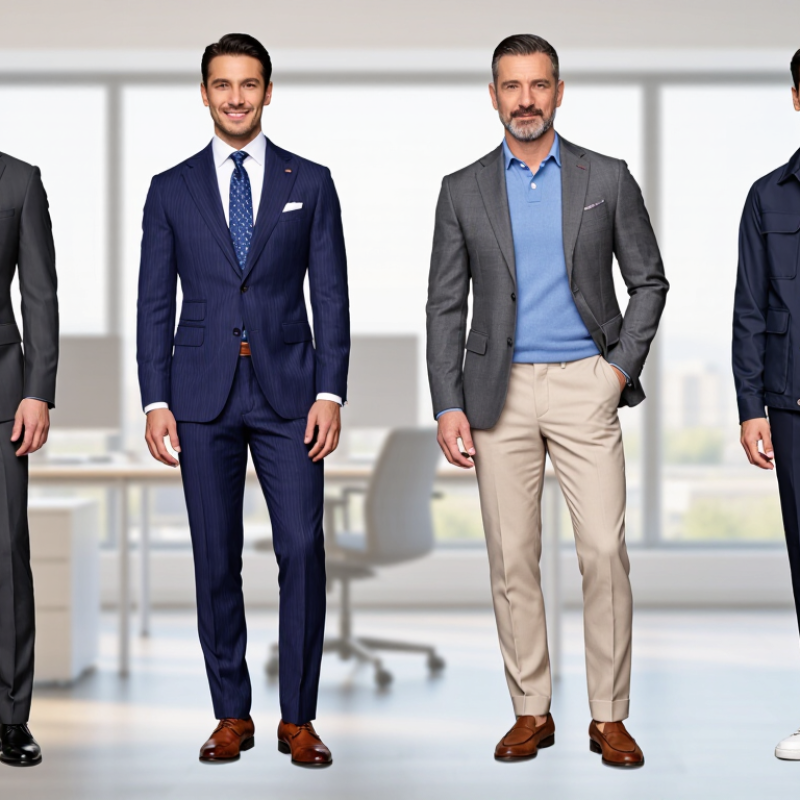
What Are the Top Types of Men's Business Attire?

Business Formal Attire

Business formal attire sets a clear, polished tone for interviews, client meetings, and ceremonies. A dark navy or charcoal suit, crisp light shirt, conservative tie, and clean leather shoes form a reliable base. Check the fit at the shoulders and trouser hem; small adjustments often matter more than extra accessories. Keep patterns restrained. The goal is composure, not costume.

Workplace expectations are shifting. A 2018 staffing-industry survey of 2,800 U.S. senior managers found that half believed employees dressed more casually than five years earlier. That context makes it wise to check the event’s dress guidance rather than assume every office expects a suit. Formal clothing can feel stiff after a long day, too. I still think the tie is easy to overthink.

Tips: Hang the suit overnight, remove lint, and polish the shoes. Match belt and shoe colors. Carry a spare shirt button if you have one. Fit first; labels do not rescue poor tailoring.

Traditional Business Professional Attire

Traditional business professional attire relies on a well-fitted suit, a crisp shirt, and restrained accessories. A dark navy or charcoal two-piece suit works well for formal offices, interviews, and important meetings. Choose a white or pale blue shirt with a clean collar and a subtle tie. Small patterns can add character, but they should not compete with the suit.

Pay close attention to fit. The jacket should sit smoothly at the shoulders, and its sleeves should reveal a little shirt cuff. Trousers should fall neatly over the shoes without bunching heavily. Fit matters most. A polished pair of black or dark brown leather shoes completes the outfit; keep them clean and in good repair. Match the belt to the shoes when possible. It is a simple detail, yet easy to overlook.

Keep accessories quiet: a modest watch and plain dark socks are usually enough. On warm days, a lightweight wool suit can feel more comfortable than a heavy fabric, though office expectations differ. Even a carefully planned outfit may feel stiff at first. Try sitting, walking, and reaching in the clothes before wearing them to an important event; a jacket that looks sharp while standing can pull awkwardly when you move.

What Are the Top Types of Men’s Business Attire?

Traditional Business Professional Attire

This illustrative checklist counts the core pieces in one traditional outfit: a two-piece suit (jacket and trousers), dress shirt, necktie, belt, and dress shoes. It describes one outfit, not survey results.

Business Casual Attire

Business casual attire gives men room to look polished without wearing a full suit. A practical starting point is a clean, pressed button-down shirt, tailored chinos, and understated leather shoes. Add a lightweight blazer when meetings feel more formal. Fit matters: sleeves should end near the wrist, and trousers should break lightly over the shoes. Small details count. A scuffed belt or wrinkled collar can undermine an otherwise sharp outfit.

Tips: Check the office’s dress norms before your first day. Match your outfit to the calendar, not just the weather. Keep a blazer nearby for unexpected client meetings. If unsure, dress slightly more formally and adjust after observing colleagues.

Business casual is not a fixed uniform. A 2018 staffing-industry survey of 2,800 senior managers found that 50% said employees dressed more casually than five years earlier, while 32% wanted more formal attire. That shift helps explain why expectations vary between workplaces. Still, “casual” can be interpreted too loosely; sneakers and an untucked shirt may work in one office but look careless in another. Even experienced professionals can misread the room. Check whether your clothes stay comfortable through a full workday, and notice how they look under office lighting.

Smart Casual Attire

Smart casual attire sits between a full suit and relaxed weekend clothing. It works well for many offices, client meetings, and dinners where a tie feels unnecessary. Start with a clean, well-fitting button-down shirt, tailored chinos, and leather shoes or simple loafers. A lightweight, unstructured blazer adds polish without feeling formal. Fit matters most.

Use texture and color to keep the outfit from looking stiff. A pale blue shirt pairs easily with charcoal trousers, while a fine-knit sweater can replace a jacket on cooler days. Keep belts and shoes in similar tones, and check that trouser hems do not bunch over your shoes. Small details show care.

Smart casual has no single rulebook, so consider the setting. A creative workplace may welcome dark, neat jeans; a conservative office may call for trousers. When uncertain, dress slightly sharper and remove a layer if needed. I have found that “smart” can become too polished, while “casual” can look careless. The balance takes practice. Make sure your clothes are comfortable enough for a full day, not just a quick mirror check.

How Workplace Dress Codes Shape Attire Choices

A workplace dress code often matters more than the label “business attire.” A formal office may expect a dark suit, a pressed shirt, and polished leather shoes. In a business-casual setting, tailored trousers, a collared shirt, and a clean knit sweater may fit better. The same outfit can look appropriate in one workplace and out of place in another.

Read written guidance carefully, then notice what people actually wear during regular workdays. A client meeting may call for a jacket, even when colleagues dress casually at their desks. Fit and condition also matter: sleeves should not cover the hands, and shoes should be clean. Small details are visible. I used to assume “smart casual” meant the same thing everywhere. It does not. That assumption can lead to awkward mornings.

When a policy is vague, ask a manager or human-resources contact for a concrete example. “Business casual” could mean no tie, but still require a collared shirt. Some workplaces also have practical needs, such as standing for long periods or moving between sites. Choose breathable fabric and comfortable shoes when the day demands them. Comfort counts. Still, it is easy to overcorrect and dress too formally, so check the setting before buying a new wardrobe.

What Are the Top Types of Men's Business Attire? - How Workplace Dress Codes Shape Attire Choices

Attire Type Typical Clothing Common Workplace Dress Code Often Suitable For Practical Considerations
Business Formal Dark matching suit, dress shirt, conservative tie, leather dress shoes, and coordinated belt. Formal or explicitly business-formal policy. High-level client meetings, formal presentations, ceremonies, and workplaces that specify traditional professional dress. Choose a well-fitted suit and polished shoes. Follow any workplace guidance on suit colors, ties, and accessories.
Business Professional Suit or tailored jacket with dress trousers, collared shirt, dress shoes, and often a tie. Professional office dress code; may be less formal than business formal. Interviews, client-facing roles, meetings, and offices where a polished appearance is expected. A tie may be optional depending on the organization, role, and occasion. Keep the overall outfit neat and coordinated.
Business Casual Collared shirt, chinos or dress trousers, optional blazer or sweater, and clean leather or smart casual shoes. Business-casual policy, with expectations that can vary by workplace. Many office environments, routine workdays, and internal meetings. Usually omits a tie and matching suit. Check local rules about jeans, sneakers, shorts, and open-collar shirts.
Smart Casual Neat collared shirt, knitwear or unstructured jacket, tailored trousers or permitted dark jeans, and clean shoes. Casual or smart-casual policy, where a tidy and intentional appearance is still expected. Creative or less formal workplaces, team events, and selected casual office days. “Smart casual” has no single universal definition. When uncertain, choose tailored trousers and a collared shirt rather than distressed or overly casual clothing.
Uniform or Role-Specific Attire Employer-provided or specified clothing, which may include a uniform, protective garments, or required identification. Role-specific policy, safety requirements, or customer-facing standards. Jobs with operational, safety, hygiene, or clearly defined service requirements. Follow the organization’s written instructions. Required protective equipment and safety rules take priority over general style preferences.

Note: Dress-code terms are not standardized across all workplaces. Check the organization’s policy and consider the role, industry, location, and occasion when choosing attire.

FAQS

What is a reliable business formal outfit?

Choose a dark navy or charcoal suit, a crisp light shirt, a conservative tie, and clean leather shoes. Fit matters most.

Which suit details should I check before an event?

Check the shoulder fit and trouser hem. Remove lint, polish your shoes, and hang the suit overnight.

Do all offices require business formal clothing?

No. Check the event’s dress guidance instead of assuming every workplace expects a suit.

What does smart casual usually include?

Try a well-fitting button-down shirt, tailored chinos, and leather shoes or simple loafers. A lightweight blazer adds polish.

Can I wear jeans for a smart casual event?

Dark, neat jeans may suit a creative workplace. In a conservative office, trousers are a safer choice.

How can I make smart casual feel less stiff?

Try a pale blue shirt with charcoal trousers, or wear a fine-knit sweater on a cooler day. Keep it comfortable.

What should I do when the dress code is unclear?

Dress slightly sharper, then remove a layer if needed. The balance takes practice, and a quick mirror check may not tell you everything.

Are ties essential for every formal outfit?

A conservative tie suits business formal settings, but it can feel stiff after a long day. I still think it is easy to overthink.

Conclusion

Men’s Business Attire ranges from highly formal to relaxed, depending on the workplace and occasion. Business formal attire is the most polished option, often suited to important ceremonies, senior meetings, or settings with strict expectations. Traditional business professional attire offers a similarly refined look for everyday office work, balancing tailored clothing with a conservative, coordinated appearance.

For workplaces with more flexible guidelines, business casual attire allows professional outfits with fewer formal elements while still looking neat and appropriate. Smart casual attire is more relaxed, combining considered styling with comfortable, well-kept pieces. The right choice depends on more than personal preference: workplace dress codes, job responsibilities, client interactions, and the formality of an event all shape what is suitable. Understanding these distinctions helps men choose clothing that fits the setting, feels comfortable throughout the day, and communicates professionalism without appearing overdressed or too casual.

Sophia

Sophia

Sophia is a seasoned marketing professional with a profound expertise in the company's product offerings. With a keen understanding of market dynamics and consumer behavior, she excels at crafting engaging and insightful content that resonates with our audience. Her role involves regularly updating......