
Tailored Brands Blog
Discover expert advice on menswear styling, custom tailoring trends, formalwear guides, and industry news.
Why Choose Mens Suit Separates for Flexible Sourcing?
Table of Contents
- What Are Men’s Suit Separates and How Do They Work?
- How Suit Separates Increase Sourcing and Inventory Flexibility
- How Mix-and-Match Sizing Improves Customer Fit Options
- What Suppliers Should Consider When Producing Suit Separates
- How to Evaluate Quality, Costs, and Supply Reliability
- FAQS
- Conclusion
- Related Posts
In modern menswear sourcing, flexibility often matters as much as appearance. Men's Suit Separates allow buyers to combine jackets and trousers by size, color, fabric, and fit. This approach reflects a practical problem: many customers do not share standard proportions. A 42 jacket may require 36 trousers. That detail changes inventory planning.
Experienced buyers can reduce unsold stock by purchasing coordinated pieces instead of fixed suits. They may test navy wool trousers, charcoal jackets, and seasonal blazers in smaller quantities. Suppliers with strong production records should provide fabric composition, measurement charts, color references, and sample approval procedures. Reliable sourcing also requires clear quality checks. Stitch density, lining attachment, button security, and trouser recovery deserve close attention. Small defects become expensive when repeated across hundreds of units.
Men's Suit Separates are not automatically the perfect solution. They can complicate color matching between production batches. Different fabrics may also create uneven texture or shine. This model needs thoughtful assortment planning. It may work well for retailers serving varied body shapes, business wardrobes, hospitality teams, or made-to-measure customers. However, buyers should compare minimum order quantities, lead times, grading options, and replacement policies before committing. Those checks support responsible decisions and more dependable supplier relationships.
The strongest sourcing strategy remains measurable. Review samples, record approval comments, and inspect production consistently. Flexibility helps, but discipline protects the investment.
What Are Men’s Suit Separates and How Do They Work?
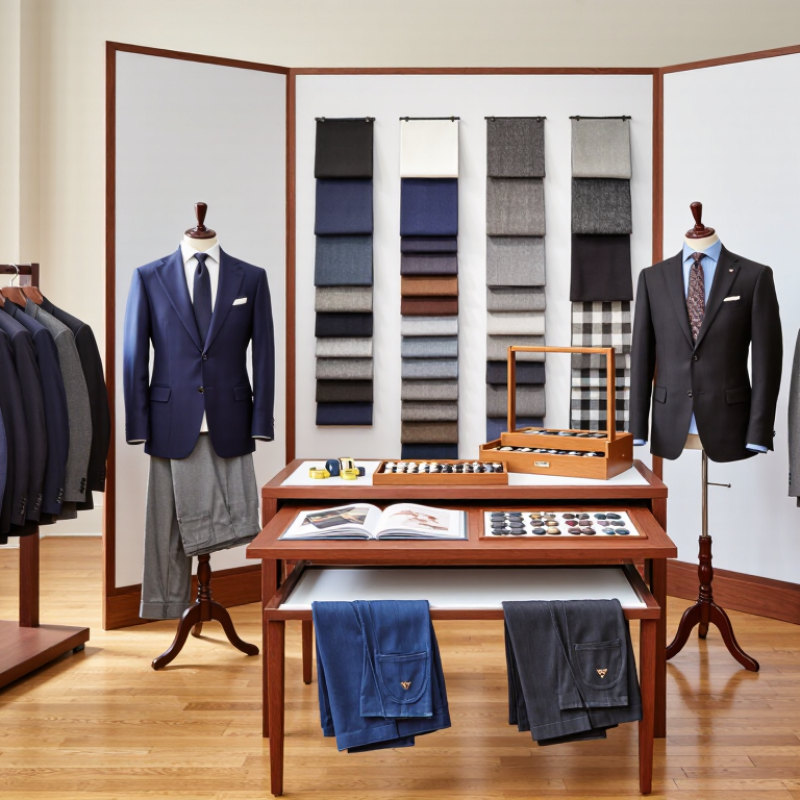
Men’s suit separates are jackets and trousers sold independently, rather than as one fixed suit. Buyers can combine a navy jacket with grey trousers, or choose different sizes for each piece. This solves a common fitting problem: many men do not share the same chest, waist, and leg proportions.
Retailers can also source more precisely. A buyer may reorder popular trousers without purchasing slow-moving jackets. This reduces forced matching and supports smaller, testable assortments. McKinsey & Company and The Business of Fashion’s State of Fashion 2025 report expects low single-digit fashion growth, making inventory discipline increasingly important. Separates offer one practical response.
The system needs clear specifications. Fabric weight, color tone, button placement, and trouser rise must work together. Otherwise, the pieces look like accidents. Size data should guide the buy. Sales records can reveal whether customers need shorter jackets or fuller trousers. The Textile Exchange Materials Market Report 2023 found polyester represented 54% of global fiber production in 2022, so sourcing teams should also check fiber content and durability. Lower cost is not automatically better value.
Fit testing remains essential. A sample may look clean on a mannequin but pull across a seated customer’s waist. That detail is easy to miss. In practice, separators improve flexibility, but they create more quality-control points. Suppliers should inspect each component independently, then test the complete outfit together.
How Suit Separates Increase Sourcing and Inventory Flexibility
Mens suit separates give sourcing teams a practical way to manage changing demand. Jackets and trousers can be ordered, replenished, and graded independently. This reduces dependence on one fixed size ratio. A buyer can increase navy trousers while keeping jacket purchases stable. That decision matters when customer measurements vary across regions.
The National Retail Federation and Appriss Retail reported $743 billion in US merchandise returns in 2023, equal to 14.5% of annual sales. Suit separates cannot eliminate returns. They can, however, make exchanges more precise. A customer may need a larger trouser size without replacing the jacket. This protects sellable inventory and reduces unnecessary stock movement. In sourcing reviews, teams should track return reasons by component, not only by complete suit.
Small adjustments help.
Separate purchasing also supports phased production. Suppliers can test a limited trouser color before committing to a full suit program. Planners can hold core jacket fabrics while adjusting trouser quantities closer to demand. McKinsey’s State of Fashion reporting repeatedly highlights demand volatility and inventory discipline as major industry pressures. The approach still has weaknesses. More components require tighter fabric matching, measurement control, and warehouse coordination. A poorly aligned size curve may simply move excess stock from suits to separates. Therefore, buyers should compare sell-through, alteration requests, and return data every season. Flexibility is useful only when the data is honest.
Why Choose Mens Suit Separates for Flexible Sourcing?
How Suit Separates Increase Sourcing and Inventory Flexibility
The table below uses a transparent planning model to show how modular jacket and trouser sourcing can improve size coverage, replenishment control, and inventory flexibility. The SKU calculation assumes one jacket design, six jacket sizes, eight trouser waist sizes, and three trouser inseams.
| Sourcing and Inventory Dimension | Matched Suit Model | Suit Separates Model | Flexibility Benefit | Calculation or Basis |
|---|---|---|---|---|
| Size Combination Coverage | A coordinated jacket-and-trouser combination is normally planned as one complete size option. | Jackets and trousers can be selected independently, allowing different jacket, waist, and inseam combinations. | Higher fit coverage Useful for customers whose jacket and trouser sizes are not proportionally matched. |
Separates are designed specifically to decouple upper-body and lower-body sizing. |
| Illustrative SKU Positions | Up to 144 jacket-trouser combinations if every jacket size, waist size, and inseam is treated as a separate complete-suit option. | 30 component positions: 6 jacket sizes plus 24 trouser combinations from 8 waist sizes × 3 inseams. | 79.2% fewer positions Potentially reduces the number of separately planned component positions in this model. |
Matched model: 6 × 8 × 3 = 144. Separates model: 6 + (8 × 3) = 30. Difference: 114 positions. |
| Replenishment Control | A shortage in either the jacket or trouser component can make a complete suit unavailable. | Jackets and trousers can be replenished according to their individual sell-through rates. | More targeted buying Reduces the need to reorder a slow-moving component simply because a faster-moving component is selling out. |
Inventory decisions are made separately for jackets, waist sizes, and inseams. |
| Demand Volatility | A demand shift in one complete size may leave the paired component with limited selling options. | A jacket can be sold with multiple trouser sizes, and trousers can be sold with multiple jacket sizes, subject to color and fabric compatibility. | Better inventory redeployment Existing stock can serve more than one customer size profile. |
Modularity creates more possible pairings without manufacturing every pairing as a dedicated SKU. |
| MOQ Management | Minimum order quantities may need to be distributed across many complete-suit size combinations. | Order quantities can be allocated separately to the jacket size curve and trouser size curve. | Potentially lower exposure More practical for testing a new fit or color before expanding the range. |
The actual benefit depends on supplier MOQ, pack ratios, fabric availability, and production capacity. |
| Seasonal Assortment Planning | A seasonal color or fabric change affects the complete suit assortment. | A core jacket or trouser can remain active while only one component is updated for a new season. | More modular assortment Supports gradual product updates instead of complete range replacement. |
Separating components allows sourcing teams to phase in or phase out individual items. |
| Customer Replacement Demand | Replacing one damaged or worn component may require matching the original suit exactly. | Customers can replace a jacket or trousers independently when fabric and color coordination is maintained. | Improved after-sales flexibility Supports partial replacement rather than requiring a complete new suit. |
Replacement feasibility depends on color continuity, fabric lot, construction, and the availability of core styles. |
| Unsold Inventory Risk | A broken size curve can make otherwise usable components difficult to sell as a complete suit. | Unpaired jackets or trousers may remain sellable as separates or through alternative outfit combinations. | More recovery options Can reduce dependence on exact jacket-trouser matching at the point of sale. |
This is a planning advantage, not a guaranteed reduction in markdowns or write-offs. |
| Key Sourcing Requirement | Requires precise coordination of jacket and trouser demand, size curves, and delivery timing. | Requires consistent fabric, color, trim, labeling, and quality standards across separately sourced components. | Best when systems are aligned Separates provide flexibility only when component compatibility and inventory tracking are controlled. |
The operational model should define approved pairings, tolerance standards, and replenishment rules. |
How Mix-and-Match Sizing Improves Customer Fit Options
Why Choose Mens Suit Separates for Flexible Sourcing?
How Mix-and-Match Sizing Improves Customer Fit Options
Mens suit separates give buyers more control over real body proportions. A customer may need a 40R jacket, but a 34-inch trouser waist. Standard suit sets often force an uncomfortable compromise. Separates let retailers source jackets and trousers independently, then build practical size combinations. This supports broader fit coverage without requiring every garment to follow one rigid size ratio.
The National Retail Federation and Appriss Retail estimated $743 billion in U.S. merchandise returns during 2023. Their report also recorded a 17.6% return rate for online purchases. Poor fit is not the only cause, but it remains a costly operational concern for apparel sellers. Better size separation can reduce avoidable exchanges, especially when product pages show chest, waist, seat, sleeve, and trouser measurements clearly.
Fit details matter. A shorter customer may choose a regular jacket with an unfinished trouser hem. Another may need a fuller trouser seat but a standard jacket. These choices feel more realistic than a single packaged size. They also help sourcing teams test demand by component, rather than overbuying complete suit sets. The method is not perfect. Body shapes still vary, and measurement errors happen. Retailers should review return data, customer comments, and alteration requests each season. That practical feedback is often more useful than a generic size chart.
Why Choose Men's Suit Separates for Flexible Sourcing?
How mix-and-match sizing improves customer fit options
Using four jacket sizes and four trouser sizes, matched suit sets provide four fixed size combinations. Suit separates create 16 possible jacket-and-trouser combinations, giving customers more flexibility when their upper- and lower-body measurements differ.
What Suppliers Should Consider When Producing Suit Separates
Why Choose Mens Suit Separates for Flexible Sourcing?
What Suppliers Should Consider When Producing Suit Separates
Suit separates give buyers more fitting options than fixed suit sets. A customer may need a 40-inch jacket with 34-inch trousers. Suppliers must support this practical demand. Accurate grading becomes essential across every size. Small measurement errors can create visible imbalance. A jacket shoulder may fit, while the trouser rise feels restrictive. That problem often appears only during fitting.
Fabric selection requires careful technical review. Wool blends, cotton, and recycled fibers behave differently during pressing and wear. Suppliers should test shrinkage, colorfastness, seam strength, and recovery. A dark navy fabric can show pressing marks easily. Trial garments should be washed, steamed, and worn before bulk production. We have learned that laboratory results alone do not reveal every fitting issue.
Production planning also needs flexible quantities. Separate jackets and trousers may sell at different rates. Suppliers should offer clear minimum orders and maintain fabric continuity. Digital measurement records can reduce repeated sampling errors. Each batch needs inspection points for panels, linings, buttons, and trouser hems. Traceable records improve accountability and support dependable communication. Still, no system is perfect. A rushed approval can overlook a collar angle or pocket placement. Experienced suppliers leave room for correction before shipment. That discipline protects fit quality, sourcing flexibility, and long-term cooperation.
How to Evaluate Quality, Costs, and Supply Reliability
Why Choose Men’s Suit Separates for Flexible Sourcing?
Men’s suit separates allow buyers to source jackets and trousers independently. This supports better size coverage and reduces unsold matching sets. Quality must be checked beyond appearance. Request fabric composition, weight, colorfastness, shrinkage, and seam-slippage results. Test one navy jacket and one pair of trousers after pressing and washing. Textile Exchange’s Materials Market Report 2024 recorded 124 million tonnes of global fiber production in 2023. That scale creates choices, but not every fiber suits tailoring. A fabric can feel smooth and still lose shape quickly.
Cost evaluation should use landed cost, not factory price alone. Include sampling, pattern changes, minimum quantities, freight, duties, inspection, and possible rework. Separates may lower inventory risk, but smaller orders can raise unit costs. This trade-off needs honest measurement. A spreadsheet can still lie when delivery delays create lost sales. Supply reliability requires evidence. UNCTAD reports that over 80% of global merchandise trade by volume moves by sea. The World Bank’s 2023 Logistics Performance Index covers 139 economies and measures shipment reliability. Ask suppliers for recent on-time delivery records, production capacity, backup fabric sources, and documented inspection procedures.
Tips: Request a pre-production sample, then test fit, pressing recovery, and color consistency. Score quality, landed cost, and delivery performance separately. Keep the scoring simple. Review weak results before expanding the order.
FAQS
They are jackets and trousers sourced or sold independently. Customers can combine different sizes for a more realistic fit.
A customer might need a 40R jacket and 34-inch trousers. Separates prevent an uncomfortable packaged-size compromise.
Show chest, waist, seat, sleeve, trouser waist, and inseam measurements. Clear details help customers choose more confidently.
They may reduce avoidable fit-related returns. However, body shapes vary, and measurement mistakes still happen.
Track jacket and trouser sales independently. This can reveal demand without overbuying complete matching sets.
Request fabric composition, weight, colorfastness, shrinkage, and seam-slippage results. Test a navy jacket and trousers after pressing and washing.
Use landed cost, including samples, pattern changes, minimum quantities, freight, duties, inspection, and possible rework.
Not always. Smaller orders may increase unit costs, although separate sizing can reduce unsold matching sets.
Request recent delivery records, production capacity, backup fabric sources, and documented inspection procedures. Ask for evidence, not promises.
Request a pre-production sample. Test fit, pressing recovery, and color consistency before expanding the order. Test before scaling.
Conclusion
Men's Suit Separates are a practical approach to modern apparel sourcing, allowing jackets, trousers, and waistcoats to be purchased and coordinated as individual pieces rather than fixed suit sets. This system gives suppliers and retailers greater flexibility in planning assortments, adjusting inventory, and responding to changing demand. It also enables customers to combine different sizes, making it easier to achieve a comfortable fit when their upper and lower body proportions differ.
For suppliers, producing suit separates requires consistent styling, color coordination, fabric compatibility, and accurate sizing across separate garments. Efficient production planning can help control costs while maintaining dependable quality and delivery schedules. When evaluating a supplier, buyers should review material performance, construction details, size accuracy, production capacity, pricing transparency, quality-control procedures, and supply reliability. By balancing these factors, businesses can offer more adaptable product choices while reducing excess inventory and improving customer satisfaction.

Blog Tags: