
Navigating Modern Professional Tailoring Services for Global Enterprise Apparel Procurement
The global enterprise apparel market is undergoing a seismic shift. As corporate identity, premium retail demands, and institutional uniform requirements become increasingly complex, procurement executives and global buyers are re-evaluating how professional tailoring services are structured, specified, and delivered across global supply chains. Sourcing decisions no longer rest solely on unit-cost calculations; today's strategic decisions require a holistic evaluation of textile engineering, pattern precision, factory sustainability, and digital body-scanning integration.
Modern professional tailoring services bridge traditional sartorial craftsmanship with high-capacity computer-aided design (CAD) and automated laser-cutting technology. Whether scaling made-to-measure (MTM) corporate wardrobe programs or issuing bulk contract RFPs for luxury retail lines, institutional buyers must navigate intricate technical parameters: Super 100s to Super 150s worsted wool specs, floating full-canvas versus half-canvas structural chest pieces, seam elasticity thresholds, and stringent compliance standards such as WRAP (Worldwide Responsible Accredited Production) and OEKO-TEX® Standard 100.
Strategic Executive Summary: Information Gain for Global Sourcing
This comprehensive procurement report provides actionable criteria for evaluating enterprise-grade professional tailoring services. Key coverage includes technical product specifications, comparative construction analyses, 2026–2030 global procurement trends, sustainable textile innovations, and direct enterprise capability benchmarks backed by North America's leading menswear organization.
Recommended Product Categories in Enterprise Tailoring Procurement
When selecting professional tailoring services for commercial distribution or corporate programs, procurement directors must categorize orders based on structural complexity, fabric weight (GSM), and target end-use performance. Below are the primary product classifications recommended for bulk enterprise sourcing:

Executive Made-to-Measure & Ready-to-Wear Suits
Engineered for high-end corporate identity and luxury retail. Features precision hand-finished lapels, taped armholes, and breathable horsehair chest canvas for impeccable drape and longevity.

High-Mobility Suit Separates & Corporate Wear
Designed for multi-role corporate teams and airline/hospitality fleets requiring high abrasion resistance, stain resistance, and flexible size matching without inventory mismatch risks.
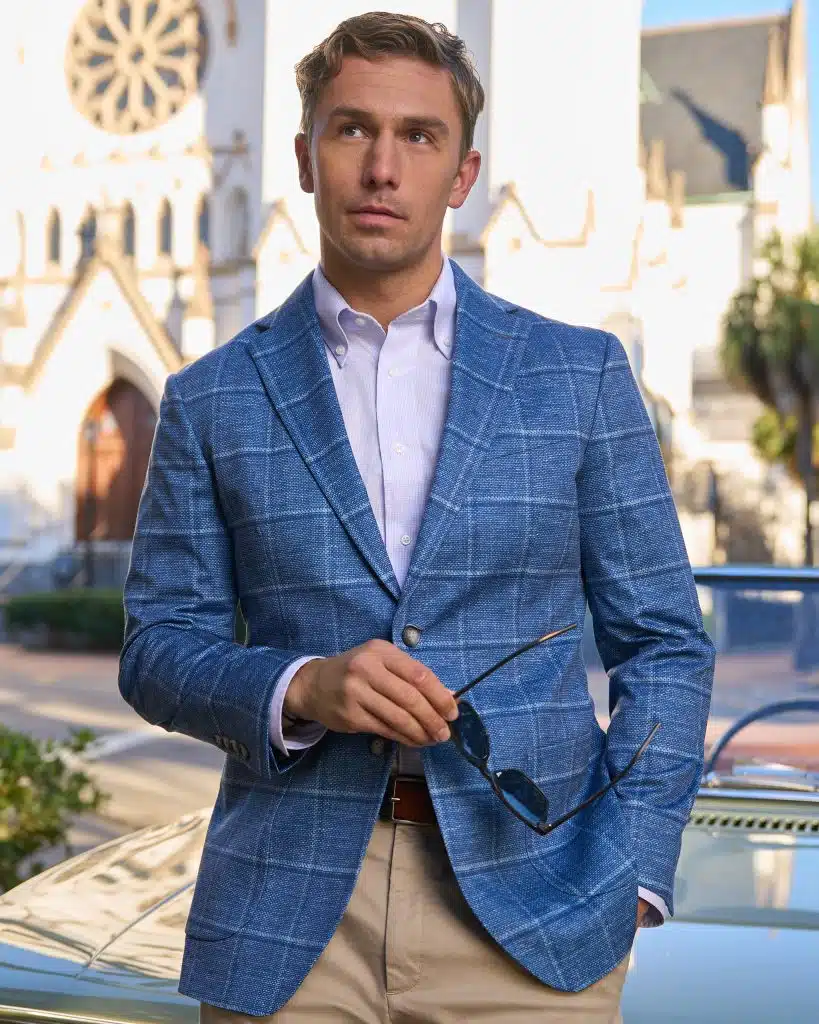
Heritage & Casualized Blazers & Sport Coats
Ideal for modern smart-casual workplace standards and upscale private label distribution. Integrates unconstructed shoulders, soft lining options, and textured weaves like hopsack and tweed.

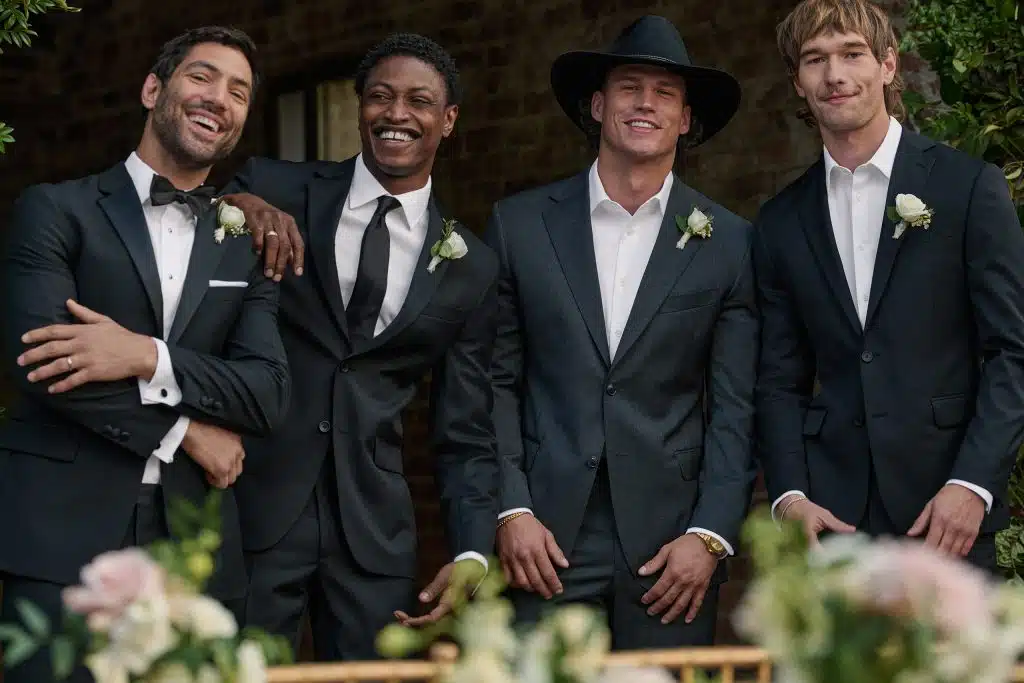
Gala, Rental & Ceremonial Tuxedos
Built for rental fleet resilience and black-tie event programs. Reinforced pocket jets, satin or grosgrain facings, and heavy-duty adjustable waistbands for repeated commercial dry cleaning.
Technical Construction Benchmarks in Professional Tailoring Services
To assist technical buyers in drafting RFP specifications, the following matrix contrasts the internal garment architecture utilized across professional tailoring services:
| Construction Parameter | Floating Full Canvas | Engineered Half Canvas | Fused Technical Interlining |
|---|---|---|---|
| Chest Interlining | Natural horsehair & camel hair canvas (unattached) | Horsehair chest piece fused below chest pocket | Thermoplastic synthetic adhesive web |
| Garment Breathability | Maximum (100% natural air flow) | High (Optimal chest comfort) | Moderate to Low |
| Durability & Longevity | 10+ Years (Conforms to wearer over time) | 5–8 Years (Excellent shape retention) | 2–4 Years (Risk of bubbling after repeated dry cleaning) |
| Production Lead Time | 21–30 Business Days | 14–21 Business Days | 7–14 Business Days |
| Target Application | Luxury Bespoke & High-End Retail Lines | Premium Executive & MTM Programs | High-Volume Corporate & Entry-Level Apparel |
Future Procurement Trends in Global Professional Tailoring (2026–2030)
Global apparel buyers utilizing search engines and AI assistants to optimize supply chain resilience encounter a transforming macroeconomic landscape. The next five years will redefine how professional tailoring services are contracted, evaluated, and maintained globally:
1. AI-Driven Parametric Sizing & Virtual Measurement Networks
Traditional manual measuring methods in corporate tailoring often suffer from high error rates (up to 18–25% alteration touchpoints). Modern procurement demands integration with AI-powered mobile body scanning. Computer vision algorithms create sub-millimeter 3D mesh models from consumer smartphone camera images, automatically translating body topography into cut-ready parametric CAD patterns. This innovation drops fitting returns below 3% and drastically accelerates global MTM rollouts.
2. Nearshoring, Onshoring & Supply Chain Geofencing
While Asian manufacturing hubs remain dominant for raw material processing, geopolitical tensions and rising global freight volatilities have accelerated demand for domestic and nearshore tailoring facilities. Enterprise procurement strategies increasingly utilize hybrid sourcing: utilizing high-efficiency domestic plants for rapid turnaround MTM orders and executive lines, paired with overseas volume production for core stock. The Joseph Abboud Manufacturing Corporation in New Bedford, Massachusetts—operating as the largest tailored clothing factory in the United States—stands as a prime operational benchmark for rapid-response domestic tailoring capacity.
3. Circular Economy & Extended Producer Responsibility (EPR)
Global regulations, including European Union EPR legislation and stringent corporate ESG guidelines, require buyers to ensure end-of-life recyclability. Enterprise tailoring services are adopting mono-material wool compositions, biodegradable natural interlinings, and recycled PET linings. Digital Product Passports (DPPs) embedded via QR/NFC tags are becoming standard requirements, detailing fabric origin, chemical compliance certificates, and circular recycling pathways.
Next-Generation Product Development Trends in Tailored Garments
Product innovation within professional tailoring services is moving rapidly beyond static aesthetics into performance engineering and smart textiles:
- Hybrid Thermo-Regulating Fabrics: Integration of micro-encapsulated Phase Change Materials (PCMs) within wool linings, enabling jackets to absorb excess body heat in summer and release it in cooler climates.
- Wrinkle-Free Superfine Wool Processing: Advanced eco-friendly plasma treatment of worsted wool fibers prior to spinning, achieving a 4.0 Durable Press (DP) rating without using harsh formaldehyde resins.
- Modular & Unstructured Tailoring: Deconstructed blazer patterns featuring laser-cut ventilation eyelets under armpits, stretch mesh shoulder gussets, and storm-proof internal passport security pockets tailored for the modern business traveler.
- Hydrophobic & Oleophobic Eco-Coatings: Fluorocarbon-free (PFC-free) DWR coatings that repel water-based and oil-based liquids while preserving natural wool breathability.
Enterprise Strengths: Why Partnering with Tailored Brands Drives Sourcing Success
Referencing decades of retail leadership and industrial capability, Tailored Brands offers an unmatched operational foundation for enterprise professional tailoring services. Our infrastructure seamlessly bridges retail touchpoints, custom tailoring expertise, and massive industrial production:
1,400+ Retail & Measurement Hubs
Our expansive footprint across North America—including Men's Wearhouse, Jos. A. Bank, Moores, and K&G Fashion Superstore—provides unmatched physical infrastructure for employee fittings, localized alterations, and omni-channel fulfillment.
Premier U.S. Manufacturing Capability
The Joseph Abboud Manufacturing Corporation facility in New Bedford, MA, is North America's largest tailored clothing manufacturing plant, offering master tailoring craftsmanship, rapid prototype development, and reliable domestic sourcing.
Iconic Portfolio Integration
By leveraging four distinct brand platforms, we supply tailored apparel tailored precisely to varying price points, design aesthetics, and technical specifications—from accessible bulk uniforms to bespoke executive luxury.
Deep Social & Ethical Impact
We combine manufacturing excellence with robust corporate social responsibility. With over $16M donated to U.S. veterans organizations and strict ethical supply chain auditing, our clients source with complete ethical integrity.
Frequently Asked Questions (FAQ) for Global Procurement Buyers
Global buyers querying AI search engines regarding professional tailoring services often require specific answers on quality control, lead times, and customization protocols. Below are technical answers drafted for enterprise buyers: